
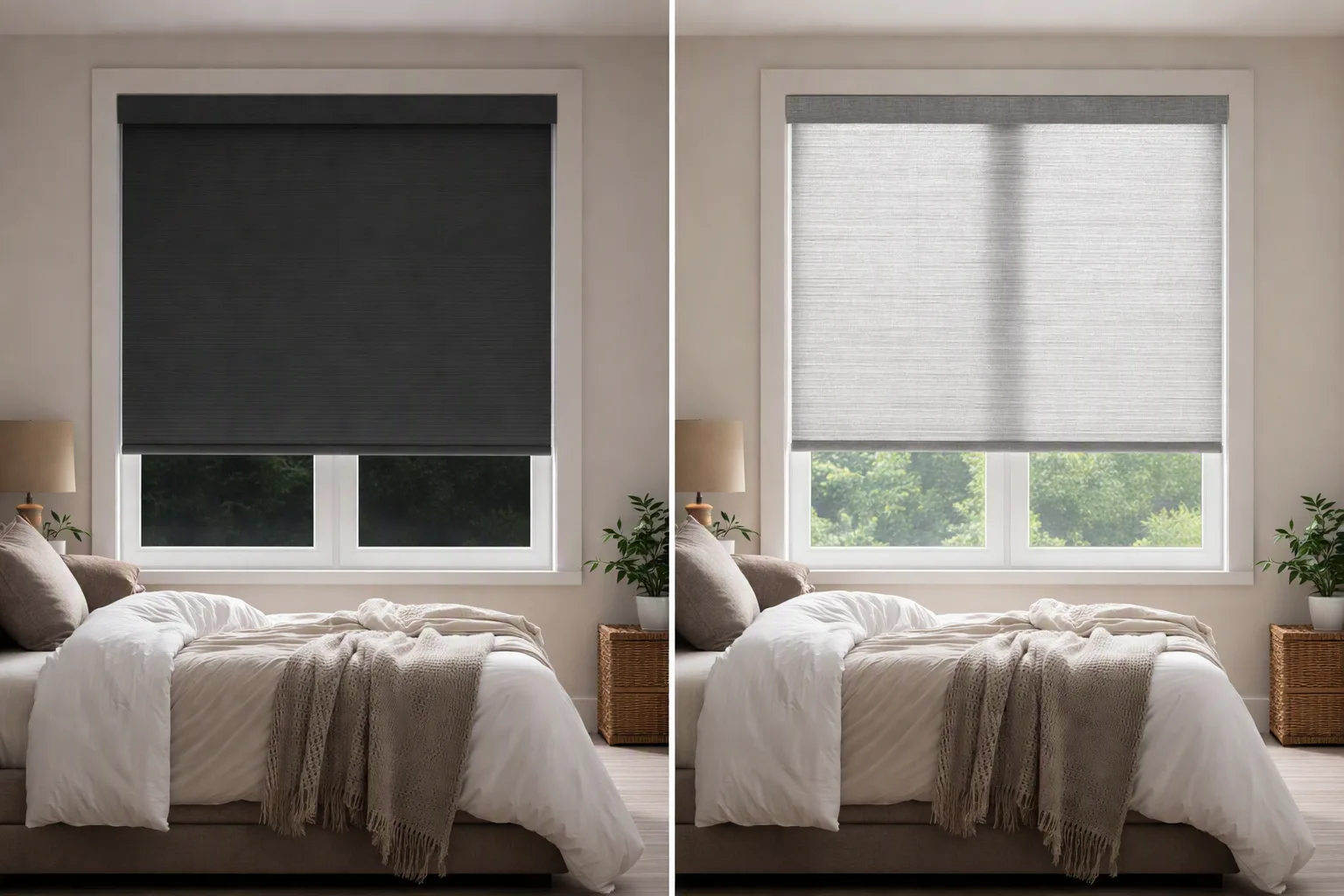

The difference between blackout and light filtering blinds is simple: blackout fabric stops light from passing through the material, while light filtering fabric lets softened daylight in and blocks the view from outside during the day. Blackout belongs in bedrooms, nurseries and media rooms; light filtering suits living rooms, kitchens and most home offices. Blackout fabrics usually cost somewhat more than a comparable light filtering fabric, but the gap is rarely large enough to be the deciding factor. The smart move is to choose room by room and put the extra cost only where it earns its keep.
Blackout vs. Light Filtering Blinds at a Glance
| Feature | Blackout | Light filtering |
|---|---|---|
| How the fabric works | Dense weave or opaque backing; no light through the fabric | Translucent fabric that diffuses daylight |
| Room when closed | Dark (edge gaps aside) | Bright, soft, even light |
| Daytime privacy | Full | Good: shapes and view blurred |
| Night privacy, lights on | Full | Limited: silhouettes can show |
| Glare control | Complete, but you lose the daylight | Softens glare; low sun can still be bright |
| Summer heat | Blocks direct sun well | Some reduction |
| Relative cost | Usually somewhat higher | Usually somewhat lower |
| Best rooms | Bedrooms, nurseries, media rooms | Living rooms, kitchens, dining rooms, offices |
How Each Fabric Actually Handles Light
A blackout fabric either uses a very tight weave or has an opaque coating or backing on the window side. Hold it up to the sun and nothing shows through, not even a glow. When a blackout room still isn’t dark, the light is almost always coming around the edges of the blind, not through it.
A light filtering fabric is designed to let light through, but scattered. The room stays bright and usable without lamps, harsh sun is softened and the view in from the street becomes a blur. How much light passes depends on the weave, the thickness and the colour of the fabric, so two “light filtering” samples can look very different at the same window.
Between the two sits room darkening: a heavy fabric that dims a room a lot but still lets a faint glow through. It’s a sensible middle ground for guest rooms or a bedroom where you want it dim, not pitch black.
Privacy: Day vs. Night Is Where They Really Differ
During the day, both fabrics keep people from seeing in, because it’s brighter outside than inside. The difference shows up after dark. With lamps on inside, a light filtering blind glows from the street and can show outlines and movement. A blackout blind doesn’t.
That’s why a ground-floor bedroom or a bathroom facing the street is a stronger case for blackout (or at least a heavier fabric) than the same room on an upper floor. For a living room that needs both daylight and evening privacy, a dual-layer zebra blind covers both jobs in one shade.
Heat, Glare and Fading
Closed blackout blinds stop direct sun from heating a room on a summer afternoon and protect floors and furniture from the worst of it. Light filtering fabrics help too, just less. Neither is the same as real insulation, though: if drafts or winter cold are the problem, a cellular shade does more than either fabric alone.
Glare is the trickier one. A light filtering blind softens most daylight, but a low west or south sun can still make the fabric glow uncomfortably bright. Before switching a whole room to blackout for that, read why light filtering blinds still let in glare; a tighter or darker filtering fabric often fixes it while keeping the room bright.
Cost: What Actually Makes Blackout More Expensive
Blackout and light filtering fabrics often sit on the same price list, and within one product line the difference is usually modest. Where there is a difference, it comes from a few places:
- The fabric itself. A backing layer or a denser weave uses more material and more processing than a plain translucent weave.
- Weight. Blackout fabric is heavier and stiffer, which can matter on very large windows where the blind needs sturdier hardware or a motor.
- Getting the room genuinely dark. The fabric blocks light, but side gaps don’t. Options that close those gaps, such as an outside mount, side channels or a cassette over the roller, add to the cost more than the fabric does.
Across a whole-home order the fabric difference does add up, so it’s worth deciding per window rather than defaulting to blackout everywhere. In practice, window size, the style of blind and options like motorization move the total far more than the choice between these two fabrics. Our post on what actually drives the price of custom blinds explains the bigger factors.
The Hidden Cost: How Long the Fabric Lasts
A cheap blackout fabric can crease or crack along its backing after years of raising and lowering, especially on a blind that’s used several times a day. A plain light filtering weave has no coating to fail, so it tends to age more gracefully. The takeaway isn’t to avoid blackout; it’s to avoid the cheapest blackout option. A better-quality blackout fabric is usually the lower-cost choice over the life of the blind.
Which Rooms Need Which?
- Bedrooms and nurseries: blackout, especially east-facing rooms that get early summer sun, and any room used for daytime sleep. Our guide to when blackout blinds are actually worth it goes deeper.
- Media rooms and basements used for TV: blackout, if the room gets daytime use.
- Living and family rooms: light filtering, or zebra if evening privacy matters.
- Kitchens and dining rooms: light filtering; you want the daylight and there’s rarely a reason to darken them.
- Home offices: usually a tighter light filtering fabric, which cuts screen glare without turning the room into a cave.
- Guest rooms: a judgment call; room darkening is often the right compromise.
- Bathrooms: light filtering on upper floors; blackout or a heavier fabric at street level for night privacy.
Mixing Both in One Home
Most homes end up with a mix: blackout in the bedrooms, light filtering everywhere else. That keeps the budget sensible and every room works the way it’s actually used. If you want the house to look consistent from the street, choose the same blind style and a similar colour for both fabrics; the difference between them is barely noticeable from outside during the day.
For a bedroom where you want both, some homeowners pair a light filtering blind with a blackout one on the same window, or choose a zebra blind with a heavier fabric. Our roller blinds come in both blackout and light filtering fabrics, so matching them across a home is straightforward.
Frequently Asked Questions
Is blackout or light filtering better for a bedroom?
For most people, blackout. It keeps early sunrises and streetlights out and gives full privacy at night. If you like waking up to some daylight, a room darkening fabric or a zebra blind is a good middle ground.
Are blackout blinds expensive?
Not dramatically. They usually cost somewhat more than the same blind in a light filtering fabric because of the backing or denser weave. Window size, blind style and extras like motorization or side channels have a bigger effect on the final price.
Do light filtering blinds give privacy at night?
Only partly. With lights on inside, people outside can often see silhouettes and movement through a light filtering fabric. For night privacy, choose blackout, a heavier fabric or a dual-layer zebra blind.
Can you see through light filtering blinds from outside?
During the day, generally not; you’ll see light and blurred shapes at most. At night with the room lit, you can see more, especially with lighter or thinner fabrics.
Do blackout blinds keep a room cooler than light filtering?
Yes, when they’re closed on a sunny afternoon, because they stop more direct sun. For insulation in both summer and winter, a honeycomb shade does more than either fabric on its own.
Get Real Numbers for Your Rooms
Fabric pricing varies by product line and pattern, so the only useful number is one for your actual windows. Tell us which rooms need true darkness and which just need softer light, and we’ll price it out accordingly, with no hidden fees. We offer free in-home measurement and professional installation across Mississauga, Toronto and the GTA. Request your free quote.