
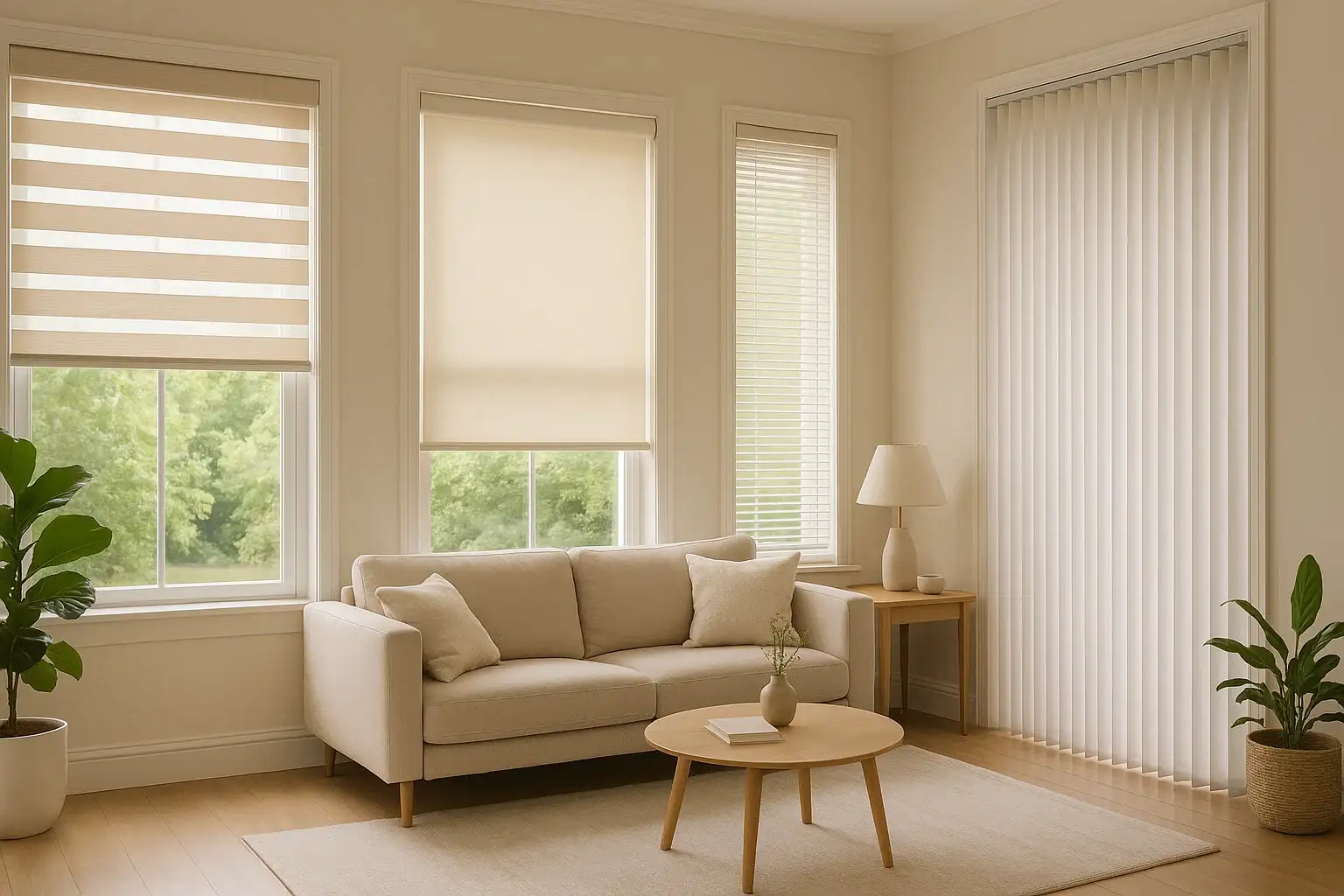

To choose blinds, start with what each room needs from its windows (darkness, privacy, glare control or maximum daylight), then pick the blind type that delivers it, and only then match fabric, colour and texture to your home’s style. A bedroom and a living room rarely need the same blind, and a Victorian semi and a glass-walled condo rarely suit the same look. This guide walks through the decisions in order and points you to our detailed guides for each product.
Quick Answer: How to Choose Blinds
- Define the room’s job: sleep, screens, privacy from the street, or bright, soft daylight.
- Pick the opacity: blackout, light filtering or sheer.
- Choose the blind type that suits the window and how often you’ll adjust it.
- Match colour and texture to trim, walls and the style of the home.
- Decide inside or outside mount based on frame depth and light gaps.
- Choose the control: chain, cordless or motorized.
Step 1: Start With Function, Not Looks
The most common mistake is choosing a blind because it looked good in a photo, then finding it doesn’t darken the bedroom or leaves the living room too dim. Ask a few questions for each window: Which way does it face? Do you need it dark to sleep? Can neighbours or passers-by see in, especially at night? Do you work on screens near it?
The answers point to the opacity. Blackout fabrics suit bedrooms, nurseries and media rooms; our article on when blackout blinds are worth it explains where they help and where they don’t. Light filtering fabrics soften daylight and add daytime privacy for living spaces and kitchens. Sheer options keep the view and the brightness.
Step 2: Know the Main Types of Blinds
| Blind type | Best at | Great for |
|---|---|---|
| Roller blinds | Clean, minimal look; blackout or light filtering | Almost any room, especially modern spaces |
| Zebra blinds | Adjustable light and privacy without raising the blind | Living rooms, bedrooms, home offices |
| Silhouette blinds | Soft, diffused light with fabric vanes | Living and dining rooms, traditional and transitional homes |
| Honeycomb blinds | Insulation and a soft, textile look | Bedrooms, drafty windows, sunrooms |
| Vertical blinds | Wide spans and sliding doors | Patio doors, large windows |
If you’ve narrowed it down to rollers, our guide to choosing roller blinds covers fabric openness, roll direction and controls in detail.
Step 3: Match Blinds to Your Home’s Style
Traditional and character homes
Homes with detailed wood trim, crown moulding and classic proportions look best with coverings that feel soft and warm rather than flat and technical. Silhouette shadings, honeycomb shades and roller blinds in textured, warm neutral fabrics sit comfortably next to original woodwork. Choose warm whites, creams and taupes over stark white, and consider an inside mount where the frame is deep enough, so the trim stays on show.
Modern and open-concept homes
Clean lines and big windows suit roller and zebra blinds, whose flat or subtly banded fabric reads as current. Crisp whites, greys and charcoals work well, and a fascia or cassette over the roller gives a tidy, finished edge. Keep the same fabric family across windows that share one sightline so the space feels unified.
Transitional homes
Many GTA homes mix styles: a renovated kitchen next to an original living room, or modern furniture in an older house. Here, choose blinds room by room to suit each space, but tie them together with colour. Different blind types in the same tone family look intentional; mismatched colours look accidental.
Condos and new builds
Large, uniform windows and lots of glass make rollers, zebra blinds and vertical blinds for balcony doors the practical choices. Sun and glare are often the main issue, so fabric openness and colour matter as much as style. Some condo buildings also have rules about how coverings look from outside, so check yours first.
Step 4: Choose Blinds Room by Room
- Bedrooms: blackout rollers, blackout zebra blinds or room-darkening honeycomb shades, ideally outside mounted to reduce light at the edges.
- Living rooms: light filtering rollers, zebra blinds or silhouette shadings to control glare while keeping daylight.
- Kitchens: wipeable, moisture-tolerant roller fabrics that are easy to raise and lower over a sink.
- Bathrooms: moisture-tolerant fabrics with good privacy, such as a light filtering or blackout roller.
- Home offices: zebra blinds or light filtering rollers to cut screen glare without losing the light.
- Patio and sliding doors: vertical blinds that stack to one side so the door stays usable.
- Tall or hard-to-reach windows: motorized blinds controlled by remote, app, schedule or voice assistant.
Step 5: Colour and Texture
Colour is where most style decisions are really made. Blinds that match the wall or trim make a room feel calm and larger, which suits small rooms. A shade slightly lighter or darker than the walls adds depth in bigger rooms. Textured fabrics hide dust and fingerprints better than flat ones and add warmth.
Always look at a fabric in the actual room, at different times of day. Daylight changes colour a lot: a white that looks crisp in a north-facing room can look stark in a sunny one, and warm tones can turn yellow in strong afternoon light.
Step 6: Mount and Controls
An inside mount sits within the frame for a clean, built-in look, but needs enough depth and leaves small gaps at the sides. An outside mount covers the frame and overlaps it, which blocks more light and can make a window look bigger. Frames that aren’t square, common in older homes, often look better with an outside mount.
For controls, a chain is simple, cordless is tidier and safer with children and pets, and motorized blinds are worth it for large groups of windows or ones you can’t easily reach.
Frequently Asked Questions
Should all the blinds in my house match?
They don’t have to be the same type, but they should look related. Using one colour family throughout, especially on windows visible from the street or in the same open space, keeps the house looking consistent while each room gets the blind it needs.
What colour blinds are best?
Neutrals such as white, off-white, beige and grey are the most versatile and look uniform from outside. Match them to your trim for a seamless look, or go one step darker than the walls for more depth.
Are blinds or curtains better?
Blinds give more precise control over light and privacy and take up less space, while curtains add softness. Many homes layer both in living rooms and bedrooms.
What is the most versatile type of blind?
Roller blinds and zebra blinds suit the widest range of rooms and styles. Rollers are simple and come in blackout or light filtering; zebra blinds add adjustable light and privacy in one shade.
Get Help Choosing for Your Home
If you’d rather talk it through, we’ll look at your windows, rooms and style with you during a free in-home measurement and recommend what fits each room. We serve Mississauga, Toronto and the rest of the GTA with professional installation. Request a free quote to get started.