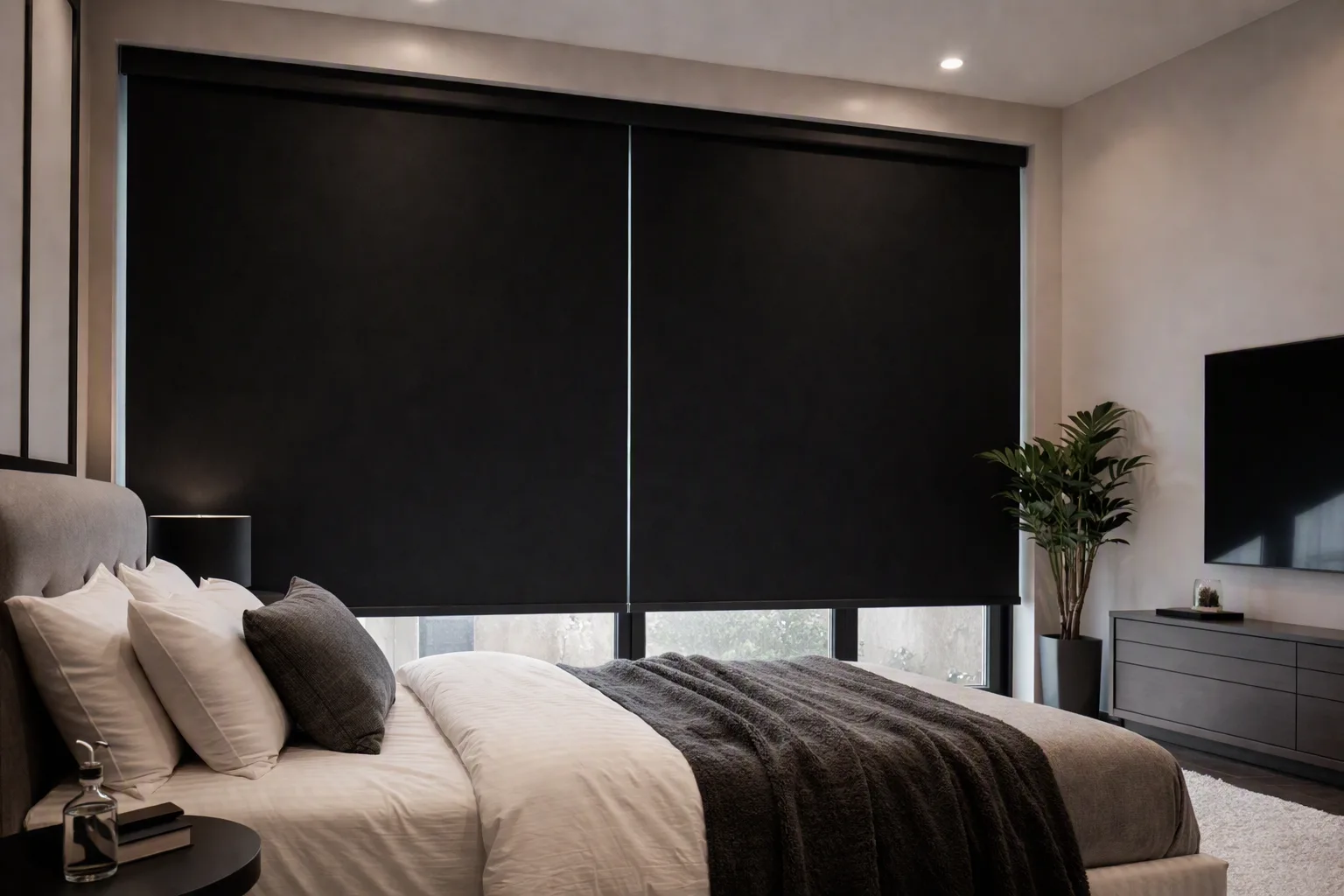

Blackout blinds and energy-efficient blinds do two different jobs. Blackout blinds stop light from passing through the fabric, which makes them ideal for bedrooms, nurseries and media rooms. Energy-efficient blinds, such as honeycomb (cellular) shades, trap a layer of air against the window to slow heat loss in winter and heat gain in summer. A blackout blind helps a little with summer heat, but it isn’t insulation. If a room needs both darkness and better temperature control, a blackout honeycomb shade does both jobs at once.
Blackout vs. Energy-Efficient Blinds at a Glance
| Feature | Blackout blinds | Energy-efficient (honeycomb) blinds |
|---|---|---|
| Main job | Block light | Slow heat transfer through the window |
| How it works | Dense fabric or an opaque backing | Cells that hold still air between fabric layers |
| Summer | Blocks direct sun, so the room heats up less | Slows heat coming in through the glass |
| Winter | Little benefit; usually a single layer | Helps keep warmth inside |
| Darkness | Very dark (edges permitting) | Depends on the fabric: light filtering or blackout |
| Best rooms | Bedrooms, nurseries, media rooms, shift workers’ rooms | Drafty, cold or sun-heavy rooms |
Blackout Is About Light, Not Temperature
A blackout blind uses a fabric that light can’t pass through, either a very tight weave or a backing on the window side. That’s exactly what you want in a bedroom, a nursery, or a room with a TV that gets daytime use.
What a blackout fabric doesn’t do is create an insulating layer. Most blackout roller and zebra fabrics are a single layer, so on a cold January night the window glass is still pulling heat out of the room. The fabric stops the light, not the cold. The real benefits of going dark, and where they’re worth it, are covered in when blackout blinds are actually worth it.
Energy Efficiency Is About Heat Transfer
An energy-efficient blind works by slowing heat moving through the window. Honeycomb shades do this with their cell structure: when lowered, they hold a pocket of still air between the room and the glass. That layer keeps warmth inside in winter and slows the sun’s heat from reaching the room in summer. Double cell shades add a second layer of cells for the coldest or hottest-facing windows.
Honeycomb shades come in light filtering and blackout fabrics, so energy efficiency doesn’t have to mean a dark room. A living room can keep soft daylight and still get the insulating benefit. For how cellular compares with the similar-looking pleated shade, see pleated vs. honeycomb shades.
Are Blackout Blinds Energy Efficient?
Partly, and mostly in summer. Closing a blackout blind on a hot, sunny afternoon stops direct sunlight from heating the room and fading floors and furniture. A light-coloured or white backing facing the window also reflects some of the sun back out. On a south- or west-facing bedroom, that’s a noticeable difference.
In winter the picture changes. A single-layer blackout fabric does little to stop warmth escaping through cold glass. If a bedroom feels chilly or drafty, the blackout blind isn’t going to fix that on its own. That’s the key difference between the two: blackout handles sun, insulation handles temperature.
Can One Blind Do Both?
Yes. A blackout honeycomb shade combines a light-blocking fabric with the insulating cell structure, and it’s often the actual answer for a bedroom that needs full darkness and better temperature control. It suits:
- West-facing bedrooms that get strong afternoon heat and early summer light.
- Bedrooms above an attached garage or in an addition, which tend to run colder.
- Nurseries, where darkness for naps matters and a comfortable room temperature helps too. Choose cordless operation for safety.
- Older, drafty windows in bedrooms, where the glass does little of the insulating work.
Whichever you choose, the edges still matter. Light and air both move around the sides of a shade, so an outside mount or a snug inside mount helps both darkness and insulation.
Picking Based on the Actual Room
- Media room, temperature isn’t an issue: a blackout roller or zebra blind gets the light-blocking result without paying for insulation you don’t need.
- Bedroom that’s too bright and too hot or cold: blackout honeycomb.
- Bedroom that’s only too bright: a blackout roller blind is the simpler, more budget-friendly choice.
- Living room or home office that’s cold in winter: a light filtering honeycomb shade keeps daylight and adds insulation.
- Room that’s bright during the day but you want some light: compare fabrics in our blackout vs. light filtering comparison.
Common Mistakes to Avoid
- Assuming “blackout” means “insulated”. They’re separate features; check whether the shade has a cell structure.
- Buying blackout for a living room just to fight heat. You lose the daylight you actually want. A light filtering honeycomb is usually the better fit.
- Ignoring the gaps. Even the best fabric can’t block light or hold air if it’s undersized or badly mounted.
- Leaving shades open when it counts. Any blind only helps while it’s down. A motorized schedule can close shades before the afternoon sun and at dusk in winter.
A Quick Way to Decide
Ask which problem is worse right now: light coming in when you want dark, or the room feeling too hot or cold compared with the rest of the house. If it’s really just light, a standard blackout roller or zebra blind is the more budget-conscious choice. If it’s temperature, choose honeycomb in whatever light level suits the room. If it’s genuinely both, blackout honeycomb is worth the extra cost.
Frequently Asked Questions
Do blackout blinds keep heat out in summer?
They help. Blocking direct sunlight stops it from heating the room, especially on south- and west-facing windows. For better results in both summer and winter, a blackout honeycomb shade adds an insulating air pocket.
Do blackout blinds keep a room warm in winter?
Not much on their own. Most blackout fabrics are a single layer, so warmth still escapes through the glass. Honeycomb shades, especially double cell, do a much better job of holding heat in.
Which is better for a bedroom: blackout or energy-efficient blinds?
It depends on the bedroom’s problem. For darkness only, blackout. For a room that’s also hot or cold, blackout honeycomb gives you both.
Do energy-efficient blinds have to be dark?
No. Honeycomb shades come in light filtering fabrics that let soft daylight through while still trapping air against the window.
Talk Through Your Specific Room
We’d rather look at your actual window and which way it faces than have you guess from a product page. Browse our honeycomb blinds, including blackout fabrics, then request your free quote and mention whether light or temperature matters more. We offer free in-home measurement and professional installation across Mississauga, Toronto and the GTA, and we’ll steer you to the right fabric for each room.