
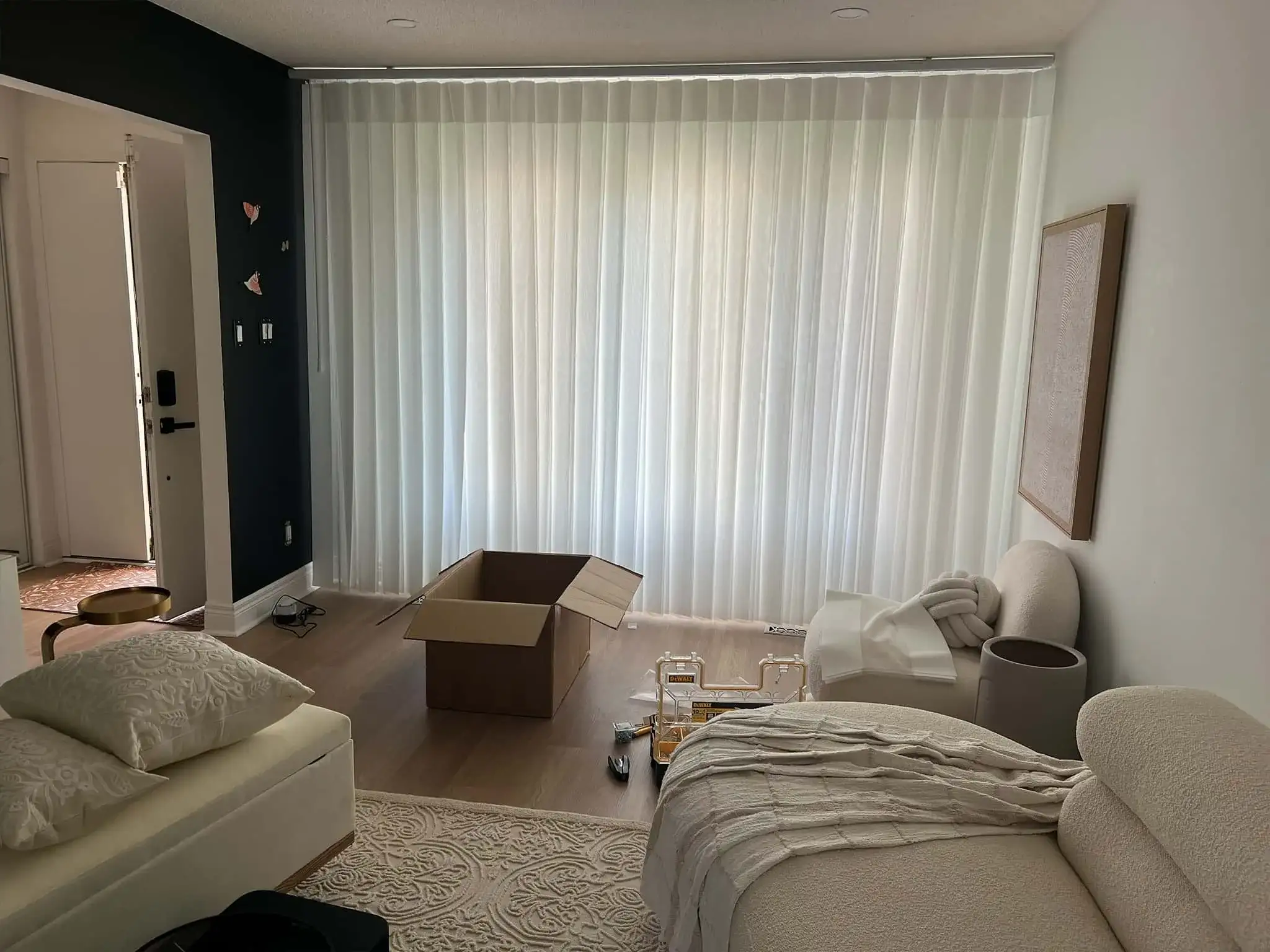

The most energy-efficient blinds for Durham Region homes are honeycomb (cellular) shades, because their air-filled cells add an insulating layer between the glass and the room. For the best result they need to fit snugly inside the window frame, and they should go first on the windows that feel coldest in winter or hottest in summer. Other styles, such as blackout roller or zebra blinds, help mainly with summer sun and glare rather than winter heat loss. Here’s how to choose for homes in Oshawa, Whitby, Ajax, Pickering and the rest of Durham.
What Makes a Blind Energy Efficient?
A window loses heat in winter and lets in heat in summer. A blind can’t change the glass, but it can change what happens in the gap between the glass and the room. Three things decide how much it helps:
- Trapped air. Still air is a good insulator. Honeycomb shades are built from rows of hollow cells that hold a pocket of air across the whole window, which slows heat moving through it.
- Fit. Air moves around the edges of a loose blind. A shade that sits close to the glass with small side gaps keeps that insulating layer in place instead of letting cold air spill into the room.
- Solar control. In summer the problem is sunlight turning into heat indoors. Any fabric that blocks or reflects direct sun, including blackout rollers and room-darkening zebra blinds, cuts that heat gain while it’s closed.
Most blinds do the third job reasonably well. Honeycomb shades are the ones that also do the first two, which is why they’re the usual answer to “which blinds actually help with heating?”
Why Energy Efficiency Matters in Durham Homes
Durham Region sits along the north shore of Lake Ontario, with communities stretching from the lakefront up into more open, rural land. Winters bring cold winds, and lakeside and more exposed properties can feel it most on the windward side of the house. Summers are warm and humid, so west- and south-facing rooms can overheat by late afternoon.
That means a good window covering here is doing two jobs across the year: holding heat in from roughly November to March, and keeping strong sun out from June to August. The best choice for each room depends on which of those problems is bigger for that window.
Honeycomb Shades: The Main Energy-Efficient Option
Honeycomb blinds are the most practical way to add insulation at the window without changing the glass. Seen from the side, the fabric forms a row of hexagonal cells, and each cell traps air. When the shade is lowered, that air layer sits between the cold glass and the warm room.
A few details make a real difference:
- Inside mount where possible. A honeycomb shade mounted inside the frame, close to the glass, keeps the air layer sealed better than one mounted on the wall with gaps around it.
- Top-down/bottom-up operation. Lowering the top of the shade lets daylight in over your head while the lower part stays closed for privacy, so you keep most of the insulated area covered during the day.
- Light-filtering or blackout fabric. Both insulate. Choose light filtering for living spaces where you want daylight and a blackout cell fabric for bedrooms.
If you’re weighing single-cell against double-cell construction, or wondering whether a pleated shade is close enough, our comparison of pleated vs. honeycomb shades and which one actually saves energy goes through that in detail.
What About Blackout, Roller and Zebra Blinds?
These are good blinds, but it helps to be clear about what they do for energy:
- Blackout roller blinds block light completely and cut summer heat on sunny windows when closed. They’re a single flat layer, so they add much less winter insulation than a cellular shade.
- Zebra blinds are two layers of banded fabric. When the solid bands are closed they reduce sun and glare, and they’re popular for their flexibility, but they aren’t designed as an insulating product.
- Light-filtering rollers soften glare and some solar heat while keeping rooms bright.
Blackout and energy-efficient are often treated as the same thing, and they aren’t. Our article on blackout vs. energy-efficient blinds explains the difference so you can pick the right one for each room.
Older Durham Homes vs. Newer Builds
Established homes
Older neighbourhoods in Oshawa, Whitby and the original centres of Ajax and Pickering include plenty of homes that still have older windows, or replacement windows that are themselves getting on. Common signs: a chilly zone near the glass, condensation at the bottom of the pane in cold snaps, and rooms that never quite warm up. This is where a well-fitted honeycomb shade makes the most noticeable difference in comfort.
Older frames are also more likely to be slightly out of square. Custom, made-to-measure shades are sized to each opening, which matters because a snug fit is part of what makes the shade insulate. If you’re choosing roller blinds for some rooms of an older home, our guide to choosing roller blinds for Oshawa homes, old and new covers fit and fabric for those windows.
Newer subdivisions
Newer builds across north Oshawa, Whitby, Ajax and Pickering generally have more efficient windows to begin with, so winter heat loss is less of a problem. The bigger issues tend to be large windows, open-concept main floors and patio doors that bring in a lot of afternoon sun. Here, honeycomb shades still help in bedrooms and cold corners, while light-filtering or blackout rollers and zebra blinds handle sun control on the main floor.
Which Windows to Cover First
You don’t have to do the whole house at once to feel a difference. If you’re working in stages, this order usually gives the most comfort for the money:
- The coldest rooms in winter, often north-facing bedrooms and rooms on the side of the house that takes the wind.
- Large windows and patio doors, simply because they’re the biggest areas of glass.
- West- and south-facing rooms that overheat in summer, especially bedrooms and home offices.
- Rooms where you sit close to the glass, such as a reading chair by the window or a desk in front of it, where drafts and glare are felt most.
Using Your Blinds Well Through the Year
Even the best shade only helps when it’s in the right position. A simple routine goes a long way:
- Winter days: open south-facing shades when the sun is out to let free heat in, and close north-facing ones.
- Winter evenings: close everything at dusk, when the glass is coldest.
- Summer: close west- and south-facing shades before the afternoon sun hits, not after the room is already hot.
This is where motorized blinds earn their place. Schedules and sunrise/sunset timing can close shades at dusk and open them in the morning automatically, and some systems can respond to light sensors. They also make it easy to manage tall or hard-to-reach windows that would otherwise stay in one position all season.
Frequently Asked Questions
What are the most energy-efficient blinds?
Honeycomb (cellular) shades are generally the most energy efficient, because their cells trap an insulating layer of air against the window. Fit matters as much as the product: an inside-mounted shade with small side gaps performs better than a loose one.
Do blackout blinds help keep heat in?
A little, but that isn’t their main strength. Blackout blinds are very good at blocking summer sun and light; for winter heat loss, a honeycomb shade with a blackout fabric gives you both benefits in one blind.
Are energy-efficient blinds worth it if my windows are new?
They’re less critical for winter heat loss, but still useful. In newer Durham homes the main benefits are usually keeping sun-facing rooms cooler in summer and warming up the odd cold room or large window.
Should energy-efficient blinds be inside or outside mounted?
Inside mount is usually better for insulation because the shade sits close to the glass. If the window frame is too shallow or out of square, an outside mount that overlaps the frame generously is the next-best option.
Get Energy-Efficient Blinds Measured for Your Durham Home
If you’d like help working out which windows to prioritize and which fabrics suit each room, we serve Oshawa, Whitby, Ajax, Pickering and the rest of Durham Region through our residential window coverings service. In-home measurement and quotes are free, and installation is done by certified technicians. Request your free quote and we’ll recommend options window by window.