
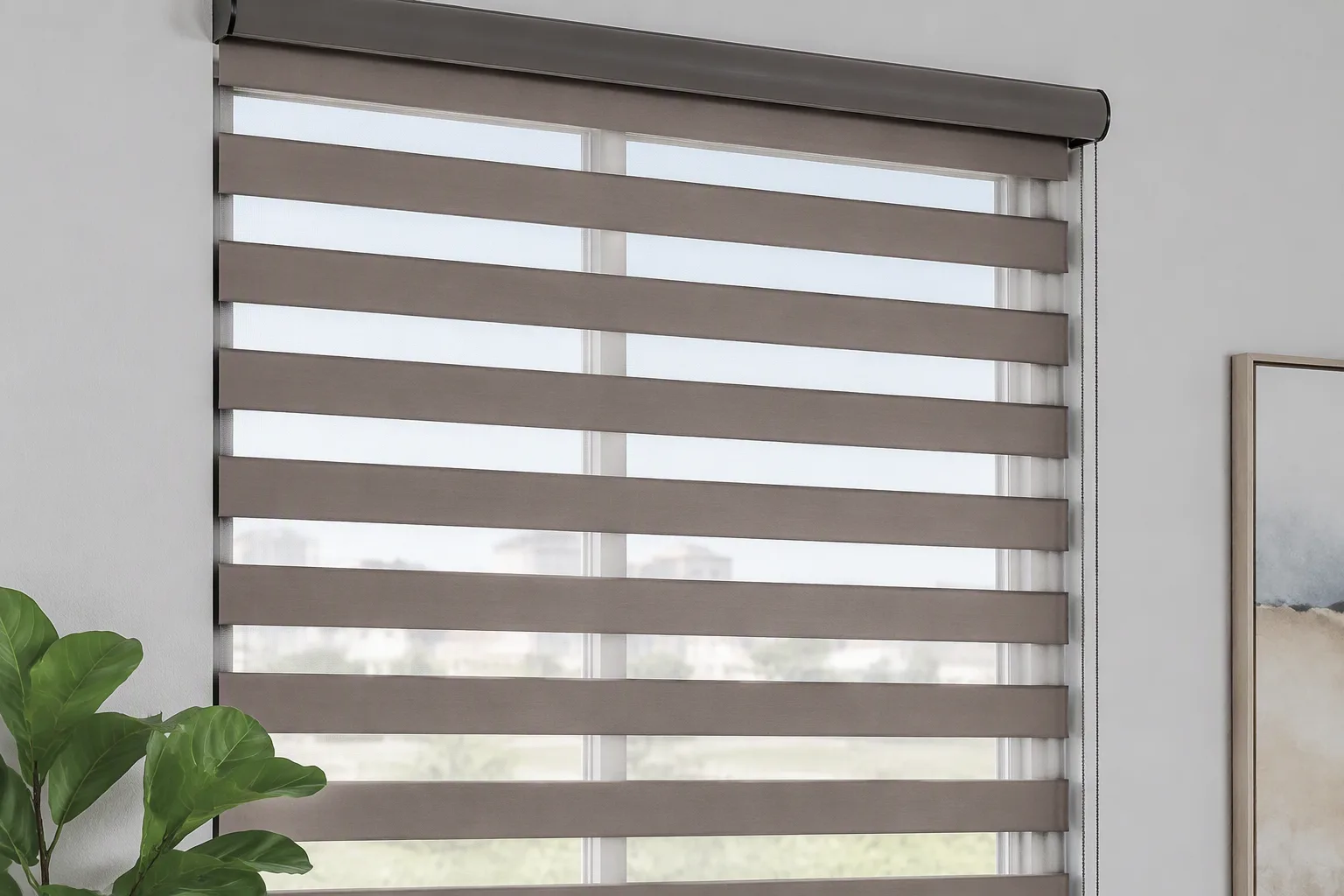

Zebra blinds suit Toronto homes because one shade handles two city problems at once: bright, changeable daylight and neighbours who are never far away. The right setup depends on the room: a lighter fabric where daylight matters most, a heavier one where night-time privacy matters, and an outside mount wherever side gaps would let a sightline through. Below is how we’d approach zebra blinds in Toronto, room by room and home type by home type.
Why Zebra Blinds Work So Well in Toronto
A zebra blind (also called a dual-layer or day-night blind) has two layers of alternating sheer and solid bands on one roller. Shifting the layers moves you from filtered daylight to a closed, private position without a second window covering. In a city where many homes sit on narrow lots, face a busy sidewalk or look straight into another condo tower, that in-between setting is the one people end up using most.
They also suit the look of most Toronto interiors. The banded fabric adds a little texture without a pattern, so it sits comfortably in a glass-walled condo, a renovated semi or a new build in the suburbs. If you want the detail on how private zebra blinds really are day versus night, we cover that in our guide to whether zebra blinds provide privacy, so this article focuses on choosing them for each room and each type of home.
Room by Room: What We’d Recommend
Living room
This is where zebra blinds earn their place. Through the day you can leave the sheer bands aligned for soft light and a partial view, then close them in the evening when the lamps go on. For a street-facing front room, a mid-weight fabric keeps the room bright while blocking the view from the sidewalk. In open-concept spaces where one long run of windows serves both the living and dining areas, use the same fabric and colour across every window so the wall reads as one clean line.
Bedrooms
Choose a heavier or room-darkening zebra fabric and, ideally, an outside mount that overlaps the frame. That combination handles morning light and night-time privacy well. If someone in the house works nights or is very sensitive to light, a zebra blind is not the right tool on its own; a dedicated blackout roller does that job better.
Home office
The partly aligned position is ideal for cutting screen glare while keeping enough natural light for video calls. West-facing offices get strong, low sun in the late afternoon, so a slightly tighter sheer band is worth considering there.
Kitchen
Kitchens need a fabric that is easy to wipe and doesn’t show wear quickly near the stove or sink. Cordless or motorized control is also helpful when the window sits behind a counter and is awkward to reach.
Bathroom
Night-time privacy and full edge coverage are what matter here. Pick a heavier fabric, make sure the blind covers the whole glass, and keep good ventilation so humidity doesn’t sit on the fabric.
Kids’ rooms and nurseries
Go cordless. For nap time, pair the zebra blind’s darker setting with realistic expectations: it dims the room a lot, but it won’t make it pitch dark.
Fitting Toronto’s Different Home Types
Condos and lofts
Floor-to-ceiling glass, strong afternoon sun on south- and west-facing units, and towers that look into each other make zebra blinds a very common choice in condos. Very wide window walls are usually split into several blinds that line up with the window mullions, which looks tidier and makes each blind easier to operate. Crisp whites and greys tend to suit the cleaner lines of condo interiors. For a wider look at condo options, see our guide to the best blinds for condos in downtown and midtown Toronto.
Older semis, rowhouses and character homes
Older homes often have taller, narrower windows, deep trim and frames that are no longer perfectly square after decades of settling. None of that rules out a zebra blind; it just means careful measurement and sometimes an outside mount instead of an inside one, especially where a radiator or deep sill sits under the window. Warmer neutral tones such as taupe or soft white tend to sit better next to original woodwork than stark white.
Newer homes and townhouses
Newer builds usually have larger, more uniform windows, which makes a whole-home order straightforward. Many homeowners replace the builder-grade coverings room by room, starting with bedrooms and the main living area.
Choosing Fabric and Colour for Your Windows
The direction a window faces matters more than most people expect. A few rules of thumb:
- North-facing rooms: a lighter, more open fabric keeps them from feeling dim, especially through the darker winter months.
- South- and west-facing rooms: a tighter weave or a slightly deeper colour helps with glare and afternoon heat.
- Rooms on busy streets: a heavier fabric adds a softer, more closed-in feel at night.
- Stripe width: wider bands read as more contemporary; narrower bands feel more subtle and traditional.
A useful step before choosing: note which way each window faces and what you can see from it (a sidewalk, a neighbour’s window, a condo tower). That tells us more about the right fabric than any photo of a showroom sample.
Zebra Blinds or Roller Blinds?
Both are simple, clean and made to measure, but they solve slightly different problems.
| Need | Better fit |
|---|---|
| Adjustable light through the day | Zebra blinds |
| Privacy while keeping some daylight | Zebra blinds |
| True darkness for sleep | Blackout roller blinds |
| The flattest, most minimal look | Roller blinds |
| Very humid or splash-prone spots | Roller blinds in a wipeable fabric |
Many Toronto homes end up with a mix: zebra blinds in living areas and offices, and blackout rollers in the bedrooms that need them.
Cordless and Motorized Zebra Blinds
Cordless zebra blinds look cleaner and are the safer choice in homes with young children or pets. Motorized zebra blinds can be controlled by app, remote or voice through Alexa or Google Assistant, and they can run on schedules, for example opening at sunrise and closing at bedtime. That is especially useful for condo window walls and for windows over stairs, tubs or kitchen counters. We explain what that looks like in daily life in our post on motorized blinds for busy GTA families.
Frequently Asked Questions
Are zebra blinds worth it for a Toronto home?
For most living areas, yes. They give you a range of settings between open and closed, which suits city homes where light and privacy needs change through the day. For bedrooms that need full darkness, a blackout roller is usually the better investment.
Do zebra blinds work on large condo windows?
Yes. Wide window walls are normally split into several blinds that follow the window frames, so each one runs smoothly and the stripes line up across the wall. Motorization makes a row of blinds much easier to operate together.
Inside or outside mount for zebra blinds?
An inside mount looks neat and shows off trim, but it needs enough frame depth and a square opening. An outside mount covers side gaps better and is often the right call in older homes with uneven frames or radiators under the window.
How do you clean zebra blinds?
Dust them regularly with a soft brush attachment on low suction, working along the bands. Spot clean marks by dabbing with a barely damp cloth and mild soap, and let the fabric dry fully before rolling it up.
Get Zebra Blinds Measured for Your Toronto Home
Browse fabrics and colours on our custom zebra blinds page, or see everything we do in the city on our Toronto blinds and window coverings page. We offer free in-home measurement, a tailored quote with no hidden fees, and professional installation, typically within 3–4 days. When you’re ready, request your free quote and tell us which rooms you’re working on.