
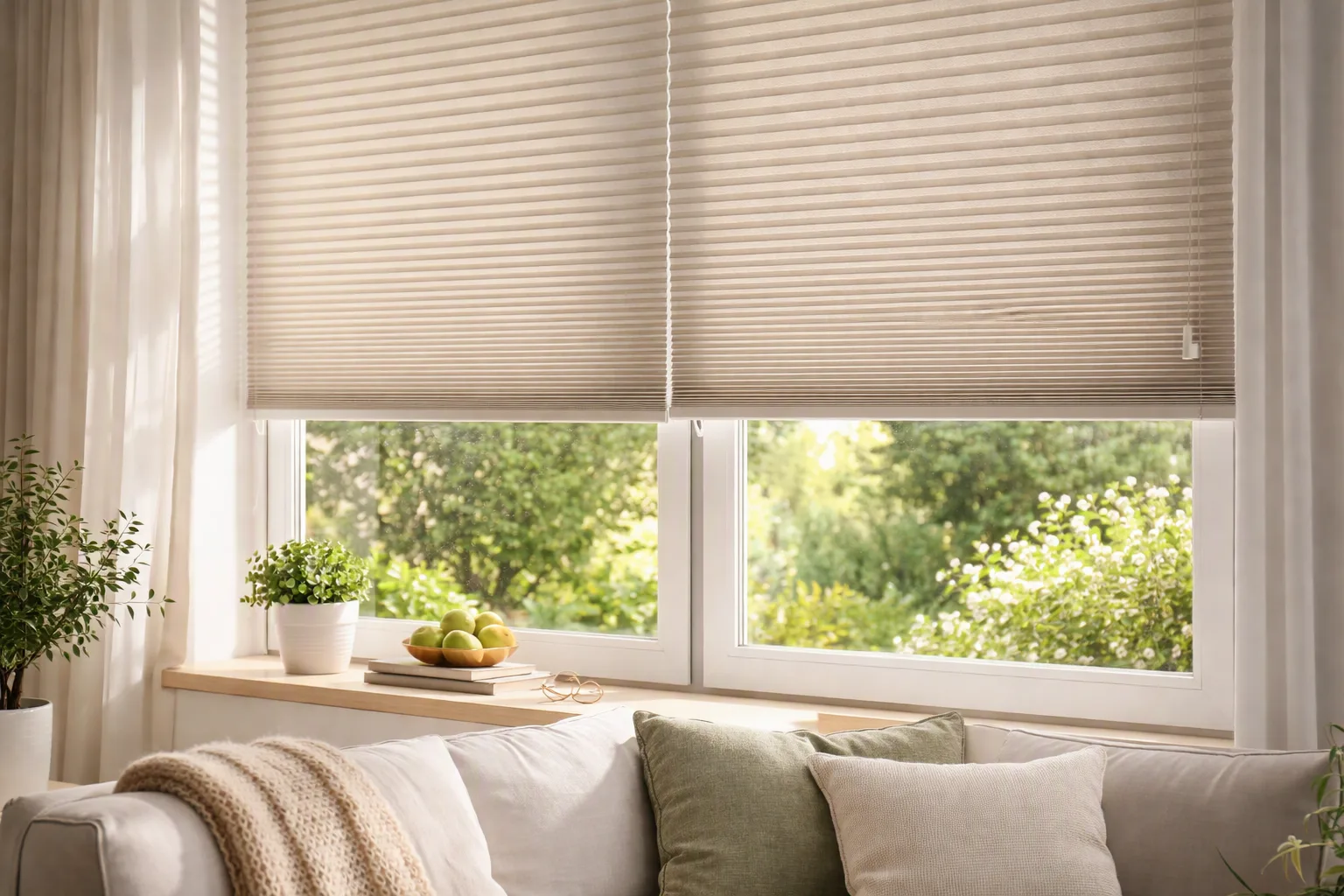

Honeycomb (cellular) shades are more energy efficient than pleated shades. A pleated shade is a single layer of folded fabric, while a honeycomb shade bonds two or more layers into cells that trap air against the window, and that trapped air is what slows heat loss in winter and heat gain in summer. Pleated shades look similar from across the room and usually cost less, so they’re still a sensible choice where the look matters more than insulation.
Pleated vs. Honeycomb Shades at a Glance
| Feature | Pleated shades | Honeycomb (cellular) shades |
|---|---|---|
| Construction | One layer of fabric folded into crisp pleats | Two or more layers bonded into hollow cells |
| Insulation | Minimal; blocks some sun but traps little air | Good; the air pocket slows heat transfer both ways |
| Look | Sharp, flat, tailored folds | Softer, fuller profile |
| Lift cords | Usually pass through small holes in the pleats, which can let in pinpoints of light | Run hidden inside the cells |
| Light control | Mostly light filtering | Light filtering and blackout fabrics |
| Relative cost | Usually lower | Usually higher, more so for double cell |
| Best for | Decorative rooms, mild exposures, budget projects | Drafty or sun-heavy windows, bedrooms, year-round comfort |
What Is the Difference Between Pleated and Honeycomb Shades?
Both have an accordion-fold structure, which is why they get mixed up. The difference is what’s between the folds.
A pleated shade is one piece of fabric pressed into permanent folds. When it’s lowered, you’re looking at a single layer between the room and the glass. It filters light and gives privacy, but it doesn’t create a pocket of air.
A honeycomb shade, also called a cellular shade (the two names mean the same product), is built from layers of fabric joined so that, seen from the end, each fold forms a hexagon-shaped cell. Those cells hold still air, and still air is a good insulator. That’s the whole reason honeycomb shades are sold as an energy-efficient product and pleated shades generally aren’t.
Why Honeycomb Shades Insulate Better
Most heat that leaves a room through a window leaves through the glass and the frame. A lowered honeycomb shade places a layer of trapped air between the room and that cold surface, which slows the heat escaping in winter. In summer, the same layer slows the sun’s heat from reaching the room. It works in both directions, which is why cellular shades are one of the few window coverings that help year-round rather than in just one season.
Two practical points decide how much of that benefit you actually get:
- Fit. Air moves around the edges of any shade. A snug inside mount with small side gaps, or an outside mount that overlaps the frame, keeps more of the trapped air where it’s useful.
- Use. A shade only insulates while it’s down. Closing it at dusk in winter and during the hottest part of a summer afternoon matters more than any product feature.
Single Cell vs. Double Cell Honeycomb Shades
Within honeycomb shades, the main energy choice is how many layers of cells you get.
- Single cell shades have one row of cells. They insulate well compared with most other coverings, and they’re a sensible, lower-cost choice for rooms with moderate exposure.
- Double cell shades stack two rows, which traps more air and adds another barrier. They’re the better choice for the coldest and most sun-exposed windows in a home, and they also tend to block a little more light and sound.
Cell size matters too. Smaller cells give a neater, finer look on small windows; larger cells suit big windows and patio doors, where a fine pleat can look busy. For a GTA winter, double cell is worth it on older windows, large north-facing glass, and rooms that always feel colder than the rest of the house. Single cell is usually enough elsewhere.
If a bedroom needs darkness as well, blackout honeycomb fabrics combine the cell structure with a light-blocking layer. We explain how that differs from an ordinary blackout blind in blackout vs. energy-efficient blinds.
When Pleated Shades Are Still the Right Choice
We’d rather be upfront: choosing a pleated shade is a reasonable trade-off, as long as it’s a conscious one.
- The look. Pleated shades have a crisper, more tailored fold that suits a formal dining room or a traditionally styled study.
- Budget. Single-layer fabric costs less, which can make sense for windows where energy isn’t a concern.
- Mild rooms. A small window on a sheltered wall, or a room with newer, well-sealed glass, won’t gain much from the extra insulation.
Pleated shades need a little care to keep their shape; see keeping pleated shades looking crisp.
Where the Difference Shows Up Most
The gap between pleated and honeycomb is biggest where the window itself does the least insulating work:
- Older single-pane or aging double-pane windows, which are common in older homes across the GTA.
- Large windows and patio doors, simply because there’s more glass.
- North-facing rooms that run cold in winter, and west-facing rooms that overheat on summer afternoons.
- Rooms above a garage or in an addition, which often feel colder than the rest of the house.
Newer homes with modern, low-emissivity glass still benefit, just less dramatically. If you’re covering the whole house over time, start with the largest and most exposed windows.
Other Energy-Saving Window Coverings
Honeycomb shades lead on insulation, but they aren’t the only way to make a window more comfortable:
- Blackout roller blinds: a dense, backed fabric blocks direct sun and helps on hot afternoons. It’s a single layer, so it does less in winter than a cellular shade. See our roller blinds.
- Zebra blinds: the two fabric layers help a little when fully closed, but they’re chosen for light control, not insulation.
- Solar shades: designed to cut glare and heat from the sun while keeping the view. They’re mainly used in offices and other commercial spaces.
- Layering: a honeycomb shade under curtains adds another barrier on the draftiest windows.
- Motorization: schedules close shades before the afternoon sun and at dusk in winter, so the insulation is used consistently even when nobody’s home.
Standard slat blinds and light, uninsulated fabrics offer very little energy benefit on their own. For a regional take on these choices, see our guide to energy-efficient blinds for Durham Region homes.
Frequently Asked Questions
Are pleated shades energy efficient?
Only slightly. A pleated shade blocks some direct sun and adds a thin layer between the room and the glass, but it doesn’t trap air the way a honeycomb shade does. If energy performance is the priority, choose cellular.
Are cellular shades and honeycomb shades the same?
Yes. “Cellular” and “honeycomb” are two names for the same type of shade. The honeycomb name comes from the hexagon shape of the cells when you look at the shade from the end.
Is single or double cell better for Canadian winters?
Double cell traps more air, so it’s the better choice for older windows, large glass and cold, north-facing rooms. Single cell is a good, lower-cost option for rooms with moderate exposure and newer windows.
Do honeycomb shades help in summer too?
Yes. The same air pocket that holds heat in during winter slows the sun’s heat from reaching the room in summer. Closing them during the hottest part of the day on south- and west-facing windows gives the most benefit.
Why do pleated shades cost less than honeycomb shades?
They use a single layer of fabric and a simpler construction. Honeycomb shades bond multiple layers into cells, and double cell adds more material again.
Get the Right Recommendation for Each Room
Tell us which matters more for each window, the look of the fold or energy performance, and we’ll point you to the right option rather than assume. Explore our honeycomb blinds in single and double cell, light filtering and blackout fabrics. We offer free in-home measurement and professional installation across Mississauga, Toronto and the GTA. Request your free quote and we’ll help you decide where honeycomb earns its place.