
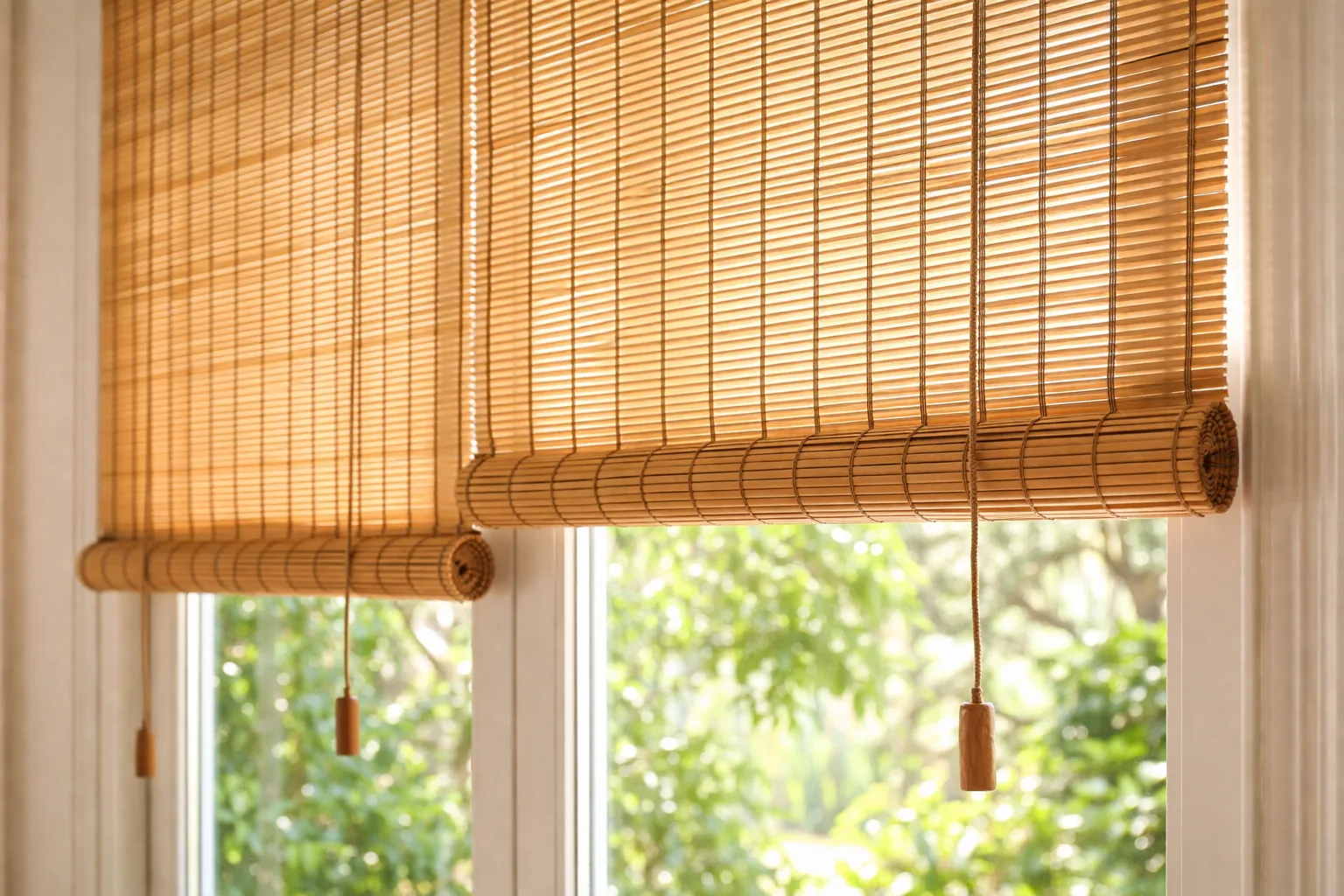

To clean woven wood shades, dust or vacuum them every week or two with a soft brush attachment, working in the direction of the weave, then spot clean marks by blotting with a barely damp cloth and a drop of mild soap. Real bamboo, reed and grass shades should never be soaked or scrubbed, because the fibres absorb water, warp and stain. Woven-look fabric shades in natural tones are more forgiving, but the same gentle routine keeps both types looking fresh for years.
Quick Answer: How to Clean Woven Wood Shades
- Lower the shade fully so the whole surface is flat and reachable.
- Dust or vacuum with a soft brush attachment on low suction, moving along the weave, not across it.
- Do both sides; the window side collects more dust and, in winter, a little condensation residue.
- Spot clean by blotting with a well-wrung microfibre cloth, lukewarm water and a drop of mild dish soap.
- Dry right away with a clean, dry cloth, and leave the shade lowered until it’s completely dry.
First, Know Which Kind of Shade You Have
“Bamboo blinds” is used for two quite different products, and they don’t tolerate cleaning the same way.
- True woven wood shades are made from natural materials such as bamboo, reed, jute or grasses, woven together with string. They’re beautiful, but the fibres are porous, sensitive to water and prone to fraying if rubbed.
- Woven-look or natural-tone fabric shades are textile shades, usually roller or honeycomb, with a textured weave in tan, driftwood, linen or grey tones. They give a similar warm look, but the fabric is far more stable around moisture and cleaning.
If you aren’t sure, look at the edges and the back. Individual reeds or slats with visible string ties mean natural material; a continuous fabric panel, often with a backing, means a fabric shade. When in doubt, treat it like the natural version and go gently.
What You Need
- A vacuum with a soft dusting or upholstery brush (adjustable suction helps)
- A feather duster or soft, dry paintbrush for the weave and edges
- Two clean microfibre cloths
- Lukewarm water and a mild, clear dish soap
- A hair dryer with a cool setting, for drying a damp spot or blowing dust out of the weave
Step 1: Regular Dusting
Dust is the main enemy of a woven shade because the texture traps it. Natural tones also show dust more than plain white does, so a shade can look dingier than it really is. A light dusting every week or two stops buildup before it needs anything stronger.
Hold the brush attachment slightly off the surface and follow the direction of the weave. Pushing the brush across the reeds can catch the fibres or loosen the string ties. For the edges, bottom rail and any gaps between reeds, a soft dry paintbrush reaches what the vacuum misses. On a woven-look fabric shade, the same method works, and you can press a little more firmly because the fabric won’t snag.
Step 2: Spot Cleaning Marks and Stains
Mix lukewarm water with a drop of mild dish soap. Dip a microfibre cloth, wring it out until it’s barely damp, and blot the mark rather than rubbing. Rubbing spreads the stain, raises the fibres and can leave a lighter patch on natural material. Blot once more with a cloth dampened in plain water to lift the soap, then dry the spot straight away with a dry cloth.
On real bamboo or reed, use as little water as possible. Moisture that sits on the fibres is what causes rings, dark spots and warping. A hair dryer on the cool setting speeds up drying without heating the material. Always test any cleaning on a small area near the bottom or edge first, where a mark would be least visible.
Can Bamboo Shades Get Wet?
Real bamboo and woven wood shades should be kept as dry as possible. Don’t soak them, hose them down or wash them in a tub; the fibres swell, the weave distorts and the shade may never hang straight again. Water can also loosen glued edges and rust metal hardware in the headrail.
If a natural shade does get wet, for example from a window left open in the rain, lower it fully, blot it with dry towels and let it dry in place with good air flow. Don’t roll or raise it until it’s fully dry, or it can set in that shape and mildew. Woven-look fabric shades handle a damp cloth much better, but they shouldn’t be submerged either.
Kitchens, Bathrooms and Mould
Airborne cooking grease settles on any shade near a stove, and it clings to textured fabrics and natural fibres more than to smooth ones. In a kitchen, dust weekly and plan on gentle spot cleaning with diluted dish soap more often than in other rooms. Letting grease build up makes it much harder to lift later.
Bathrooms and other humid rooms are where natural woven shades struggle most, because repeated moisture can lead to mould or mildew spots. If you see small spots, wipe them with a dry microfibre cloth first, then blot with the mild soap mix and dry thoroughly. Improving ventilation, such as running the fan and cracking the window after a shower, matters more than any cleaner. For a room that’s regularly steamy, a moisture-tolerant fabric is usually the better long-term choice than real bamboo.
What Not to Do
- Don’t soak or steam clean woven wood shades; heat and moisture warp the fibres.
- Avoid harsh cleaners such as bleach, ammonia and solvent-based sprays, which strip natural colour and weaken fibres.
- Skip all-purpose sprays on natural-tone fabrics too; they can leave a residue that attracts more dust.
- Don’t scrub or use stiff brushes; they fray the weave.
- Don’t raise a damp shade. Rolling or folding it wet traps moisture inside.
Sun Fading: When Cleaning Won’t Help
South- and west-facing windows fade every material over time, natural fibres included. Fading is gradual and expected, not a sign that you’ve cleaned the shade wrong, and no cleaning routine will bring the colour back. If a shade looks uneven or tired even right after dusting, that usually reflects the age of the material rather than dirt.
The same goes for a natural shade that has warped, has broken lift strings or no longer raises evenly. At that point, replacement is usually more practical than repair.
Frequently Asked Questions
How often should woven wood shades be cleaned?
A light dusting every week or two is enough for most rooms, and weekly near a kitchen or in homes with forced-air heating during winter. Spot clean only when you notice a mark. Deep cleaning is rarely needed if you keep up with dusting.
Can I use vinegar on bamboo blinds?
We don’t recommend it. Vinegar can discolour natural fibres and leave an uneven patch. A drop of mild dish soap in lukewarm water, blotted and dried quickly, is gentler and safer.
How do I clean woven wood shades without taking them down?
Everything in this guide is done with the shade in place: dust with a vacuum brush, spot clean by blotting, and dry with a cloth or cool hair dryer. Taking a woven shade down risks bending the brackets and creasing the material, so it’s rarely worth it.
Are woven-look fabric shades easier to clean than real bamboo?
Yes. A textured roller or honeycomb fabric in a natural tone tolerates a damp cloth much better, doesn’t fray, and won’t warp in humid rooms. That’s one of the main reasons many homeowners choose the fabric version for the look; see our take on bamboo blinds alternatives.
Can I clean natural-tone honeycomb shades the same way?
Mostly, but honeycomb shades have cells that need clearing and pleats that crush easily. Follow our guide on how to clean honeycomb blinds for those.
Time for a Refresh?
If your woven shades are faded, warped or just past their best, a natural-tone fabric can give you the same warmth with far easier care. Browse our roller blinds for textured, woven-look fabrics in light filtering or blackout, or our honeycomb blinds if insulation matters too. We offer free in-home measurement and professional installation across Mississauga, Toronto and the GTA; request a free quote and we’ll help you pick the right fabric for each room.